How to answer "What's your biggest weakness?" in a job interview
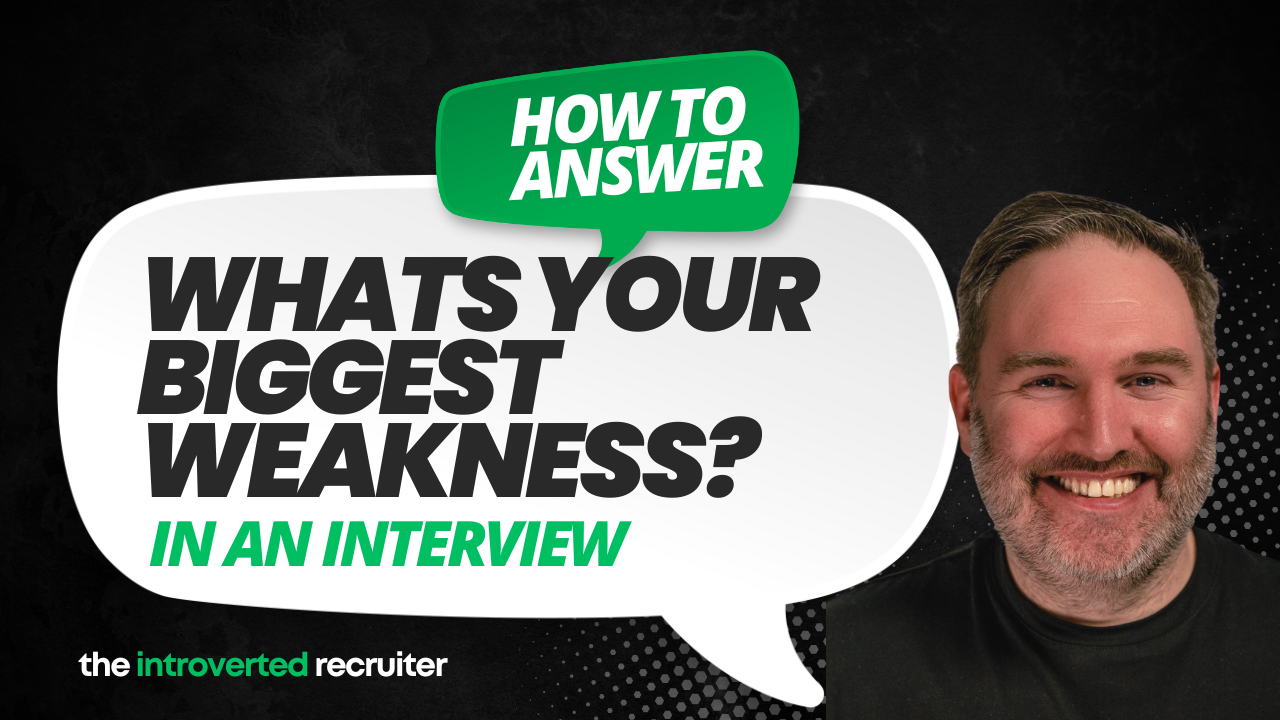
When you’re in a job interview and they ask, what's your biggest weakness.
They don’t really care what your weakness is.
They care about three things:
- Your self awareness
- The impact of that weakness
- What you’re doing about it.
My name’s Lee, I’ve been in talent acquisition for over 20 years and sat in thousands of job interviews.
I’ve seen this question answered very well and very poorly.
I’ll run through the poor answers and then give examples of what a good answer looks like.
So the poor answers, include statements like “I’m a perfectionist”.
It doesn’t really mean anything, unless you can clearly state the impact it’s had on your work and the steps you’re taking to improve.
And it’s also a weakness they’ve heard a million times before.
So how do you answer it?
First of all, pick a weakness that’s real.
Because a good interviewer will probe and ask follow up questions and you don’t want to find yourself in a situation where you’re having to make stuff up on the spot.
Next think about the impact that weakness has had in your career, what did it prevent you from doing, how did it hold you back, why did it matter.
And finally, think about the steps you’re taking to address that weakness.
Here’s two examples that I’ve actually used when I’ve been in job interviews and been asked that question:
So the first example:
I’ve had feedback from my manager in the past that I’m too calm, even when the pressure is really on and whilst being calm can be a positive it can also give the impression to stakeholders that I don’t care or understand the seriousness of a situation.
I’d never realised that before, so now I make sure that stakeholders understand I do care and I do understand, from both the words I use and my body language.
In that example I picked a real example, I explained it’s impact and also talk about what I’m doing to address it.
The second example:
I’ve always had a hard time delegating, I always thought it was quicker and easier to just do certain things myself rather than delegating to somebody in my team.
This often meant that I became a bottleneck, I slowed things down but also I was taking away development opportunities from people in the team.
So now, I always ask myself “Is this something I should be doing, who can I pass it down to and what does it free me up to focus on”.
Again in that example I’ve talked about a real weakness, the impact it had and what I’m doing about it.
Like I said at the top of this video, they don’t really care what the weakness is.
They’re looking for some self awareness, some recognition that you’re not perfect and do have some development gaps that you’re working on.
And the good thing about this question, is that you know you’ll probably be asked it in most job interviews, so you can prepare for it.
Do like this video, drop in any comments and please subscribe to the channel for more no-nonsense job search and career advice.